Categories
My Art Journey Running an Art Business

Artistic Impressions Feature

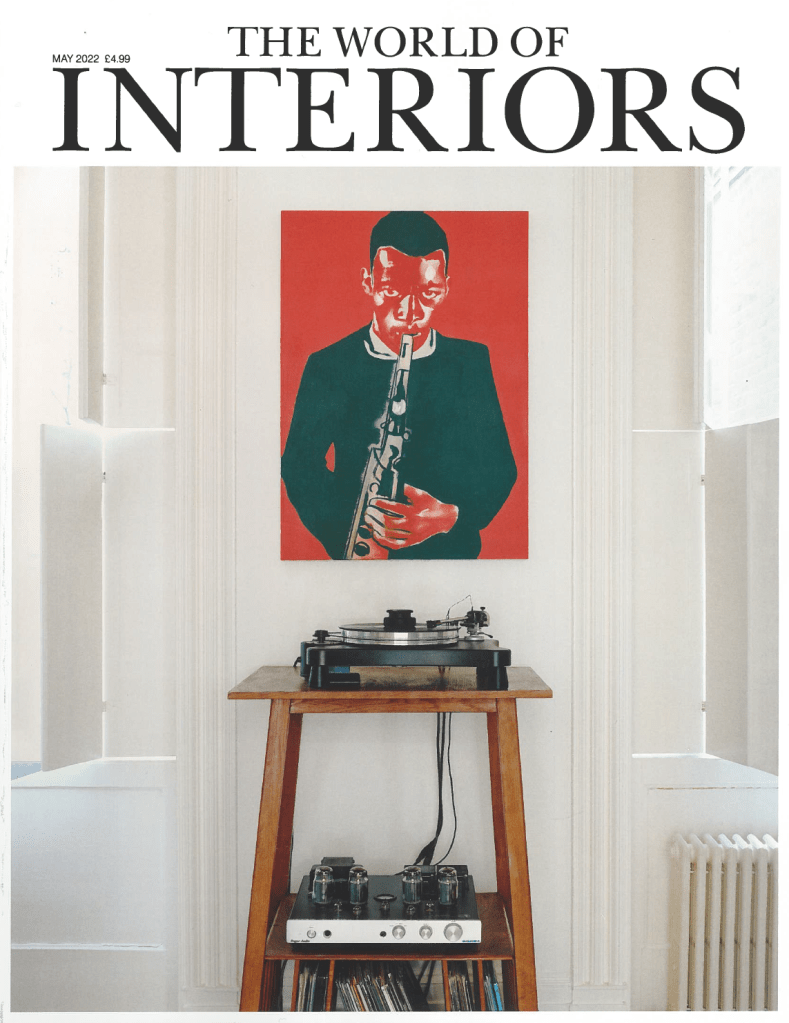
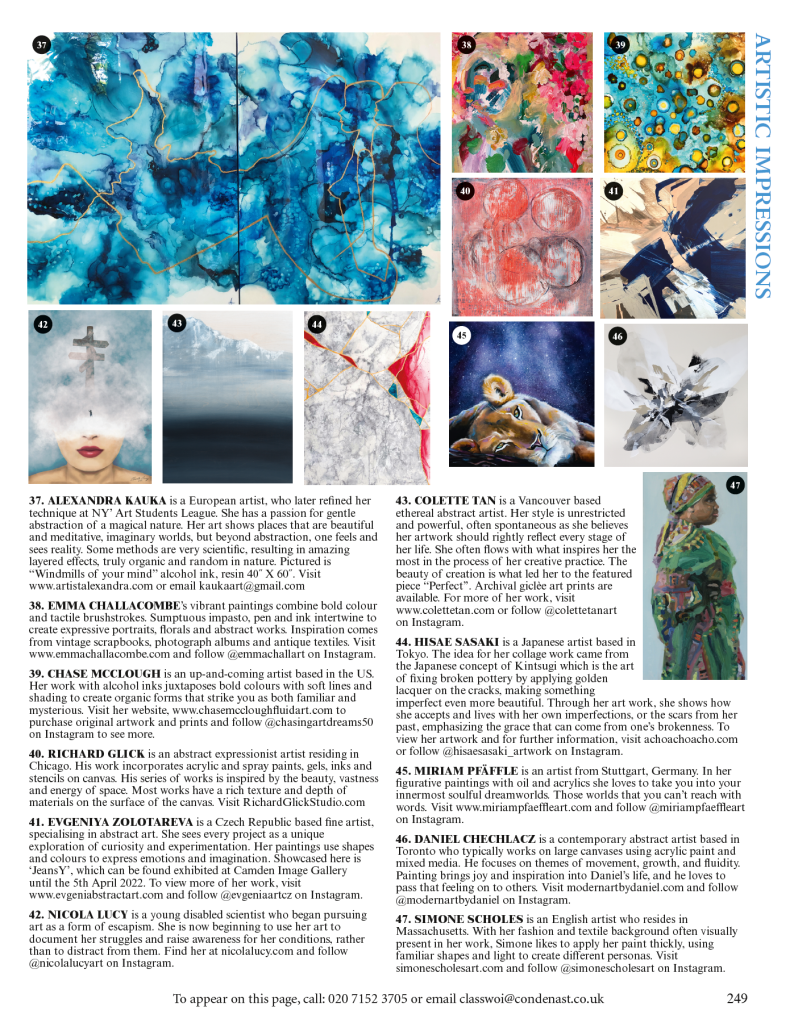
Late last month I received an email from one of the sales executives at Condé Nast’s World of Interiors inviting me to advertise my work in their Artistic Impressions feature for the May 2022 issue. The World of Interiors magazine is collected by over 155,000 reader worldwide, and it was a huge shock to be noticed by such a prestigious publication.

I submitted my piece ‘Brain Fog‘ (2022), as this is a huge opportunity for me to showcase my art raising awareness of my health conditions.

I’m proud of every brush stroke in that piece, and it’s so exciting to me to think of so many people being able to see it.

The May 2022 issue is being released today, March 31st 2022! If you pick it up and happen to see my art in there, feel free to show me on social media by tagging me @nicolalucyart (Instagram, Twitter, TikTok & Facebook)!

Having an art piece sell in a gallery for the first time, and then featuring in a magazine, is such a wonderful way to start the year!

Find out more:

Categories
My Art Journey

Digital Art and ME

Whether you agree with the sentiment or not, a lot of digital artists or fans of the medium will have heard things like “digital art isn’t real art” or “digital art doesn’t belong in a gallery”.

As a primarily digital artist, over time I’ve developed an arsenal of arguments against that way of thinking. However, one in particular that I don’t think gets mentioned enough is that for some disabled people, it can be the most accessible way of creating art.

I suffer from both myalgic encephalomyelitis (ME) and fibromyalgia (FMS) whilst working a physically demanding full-time job. Both of my conditions cause a lot of fatigue and pain, amongst other symptoms, and so whenever I’m not in work I’m often resting in bed.

Why traditional art isn’t ideal for me

I love the feeling of creating traditional art. I love the challenges of trying to master such unpredictable mediums. I love the appreciation and acceptance of imperfections in the artwork, which is often the result of having no undo button. I have a huge amount of respect for those who have mastered their traditional medium.

But when you’re exhausted, in pain, and really should be in bed – creating full-colour traditional artworks becomes more a challenge. If I want to create traditionally, I am presented with two options.

Option 1: I bring the supplies onto the bed with me. When working with just a pencil and sketchbook, this is a fairly reasonable option. However, the challenge comes in when colour is added into the mix. Adding colour results in needing many more supplies, which can create mess and get lost in the sheets. If the fatigue starts to become too much and I need to lie down properly, clearing the bed in that state can be a struggle for somebody like me.

Option 2: I work at a desk. This would allow me to keep my bed clean and clear, so it’s ready for whenever I need it. However, sitting at a desk can be more painful and tiring for me. I often find that my traditional pieces are rushed, because 5-10 minutes in I’m already aching and wanting to finish.

The benefits of drawing on a tablet

Nowadays I primarily draw on my iPad and it has worked wonders in terms of allowing me to draw more frequently, and to be able to do so for longer periods of time. When I’m sat in bed using it to draw, I can use as many colours as I want just from my Apple Pencil. My bed isn’t littered with art supplies. Even better, the fact that it attaches magnetically to the side prevents me from ever losing it in the sheets. And when I’m too tired to continue? I can simply switch it off and put it on my bedside table.

The bottom line

I appreciate that digital art is not for everyone. However, the key to a thriving art scene is allowing creating art to be accessible to as many people as possible. For some, traditional art is the best option to fit their preferences and life situation. For myself, digital art opens the door for me to create much more regularly than I ever could if that option was taken away from me.

Disclaimer: Every person is different in terms of their needs and their situation. As a result, a medium that is more accessible for one person may be less accessible for another.


Categories
Running an Art Business

Pricing Art and Why It Matters

It’s no secret that pursuing a career in art is not always the most stable of incomes. Whether you’re just selling art as a hobby, or pursuing it as a full-time profession, pricing correctly is very important.

How To Price Artwork

The general rule of thumb is to consider all of the following:

  1. Time taken: Make sure you are earning at least minimum wage for the amount of time that you spent on the artwork.
  2. Cost of materials: Make sure that the cost of any supplies used is included.
  3. Packaging and delivery: Have a rough idea of how much packaging and shipping will cost, and make sure that this is highlighted.
  4. Skill level: Some artists will mark up the cost of their artwork to reflect their level of skill, experience, or education so that they are making more than minimum wage.
  5. Original or print? A print is inherently less valuable than an original as you can reproduce it. If you’re doing a limited run of a print, one way of pricing it could be to divide the total cost of the labour and materials by the number of prints.
    • Note: this is why many digital artists struggle to sell non-commissioned pieces for decent amounts of money.

Why It Matters

You may have seen some artists price their works at incredibly low price points, including below minimum wage. Quite often this is to encourage customers to shop with them rather than the more expensive competition, or due to a lack of confidence in how much the piece is worth.

It’s important to remember to not give in to the temptation to reduce prices, even if you only do it as a hobby, because this leads to a downwards spiral. Your competitors, who may lose business to your low prices, may lower theirs to compete with you. You then may feel tempted to lower yours to compete again. Then they do the same. This continues until the art is essentially worthless.

Your art took your time, energy, and involved some form of materials. When selling your art, you deserve to be paid for all of that fairly. Please do not devalue your own work.